Nepali Fast – Tuesday

Drawing near to God:

It’s quite common to become irritable during a fast.  In a total food fast this moodiness is accentuated.  In our Nepali fast, you may not be having hunger pangs, but you may be craving some more familiar cuisine.  Either way our stomachs really do have a say in how we’re feeling.  When those pangs and cravings hit, let’s use those moments as opportunities to direct our attention toward God and allow him to rule over our guts.  He is the Lord of everything after all.

Drawing near to others:

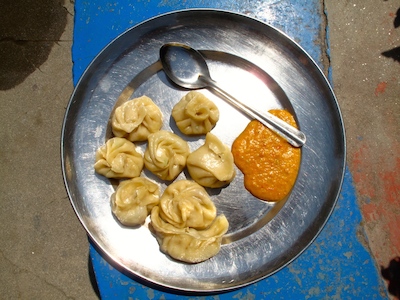
Momos Nepali Fast

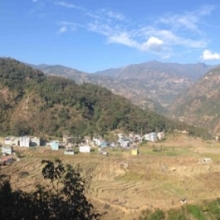
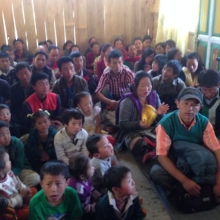
Momos!  This chicken or buffalo-filled dumpling is a popular food all over Nepal and there is a great variety in price depending on where you buy it.  These momos were made at the Kathmandu Vineyard for about 80 rupees (CAD $0.91).  The “new boys and girls” (kids who live at the Vineyard that are from broken families or the street) love momos.  It’s a real treat for them.

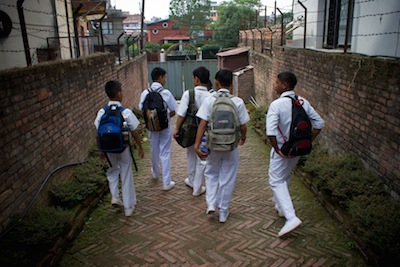
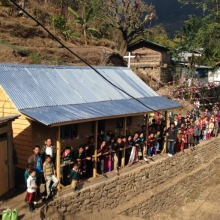
The boys head to school.

Pray for the new boys and girls at the Kathmandu Vineyard – that God would reveal his heart to them and heal them from the pain that they’ve experienced, that they’d be rooted and established in His love and feel at home in the Vineyard community, and that they’d have strength to walk into the future and hope that He has for them.

Nepali Fast – Monday

Welcome to the first full day of our Nepali Fast!  These daily updates are meant to inspire and inform us in our prayer and fasting activities this week.

Drawing Near to God

Draw near to GodPart of what it means to draw near to God is to pray that we have his heart – that we see the world from his perspective and are moved by it.  Somehow when we are close to him his heart is transferred to us.  What he cares about, we begin to care about.

Pay attention to the movements of your heart today.  Where is he inviting you closer?  What does he want to share with you?  In the activities of your day, pay attention to the moments his Spirit is whispering.

Drawing Near to Others

Part of our fast, by way of Isaiah 58, is meant to help us draw near to others in healthy ways.  Understanding the lives and burdens of our Nepali brothers and sisters will help knit together the bond of love we have.  Also, we want to pray for others.

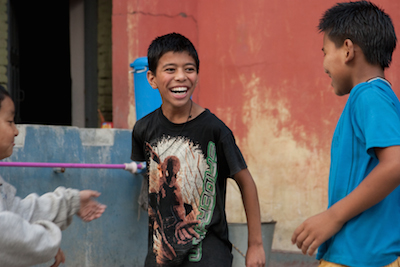
Misal, Amit and Lakpa play in the Katmandu Vineyard courtyard.Today is the “Global 4-14 Day“.  It is a day to pray for the generation between the ages of 4 and 14.  Across the world, 71% of the people who are currently following Jesus begin to do so within this age range.

Today let’s pray for the kids and youth of the Himalayan Region and Winnipeg.

  • Reaching children – that Kids and youth would come to know and passionately follow Jesus.
  • Calling children – that God would sovereignly reveal himself.
  • Protecting children – from all manner of evil (slavery, malnutrition, gangs, prostitution, homelessness, hopelessness, etc).
  • Releasing children – to lead in prayer and praise.
  • Resourcing children – that God would send workers.
Photo Credits (excluding the hand): Matthew Sawatsky

Lent – Watering Dry Bones

It’s what we all want isn’t it?  To see life come to the dry bones?  To see skin and flesh clothe hollow skeletons.  To see the goodness and mercy of the Father enfleshed.  To see the dream of a distant land flowing with milk and honey brought to our land.  To see hope restored and death reversed.  It’s what we all want isn’t it?

Here’s another meditative moment from The Work of the People.

Lent – Leaving Ourselves at the Altar

Many are familiar with the line in Psalm 23, “…goodness and mercy will follow me all the days of my life…”  It’s a nice thought, but a one that does not nearly capture the tenacity of God’s goodness and mercy.  These qualities don’t follow us around like a lost puppy looking for its home.  Goodness and mercy are relentless, tenacious and precise in their pursuit.  They will track us down like a hunter tracking it’s prey.  They will seek us out like a heat-seeking missile.  Simply put, God will hunt us down with his goodness and mercy – through the valley of the shadow of death – through the suffering of the loss of Eden – right to where we are today in the middle of Lent, preparing to celebrate and welcome the resurrection of the one who made it all possible…

Here’s another meditative moment from The Work of the People.

Nepali Fast – Isaiah 58

Isaiah 58 Fast

April 13 – 20

In the bible, fasting and prayer usually go together. Fasting isn’t simply about the lack of food, or the lack of anything else for that matter, but rather an intensified focus, or shift in perspective from something temporal to God. It’s about bringing our attention to the Lord in a specific way for a particular time by reducing our dependence on something physical. Our physical hunger reminds us that we are really hungry for God.

It makes sense, then, that fasting and prayer go together. However, it seems that if our lifestyles are not extending grace, mercy and justice in practical ways, our fasting is distasteful to God. Isaiah helps bring clarity to this issue in chapter 58 where he links “true fasting” with feeding the hungry, sharing with the poor, keeping the Sabbath and in general, living justly.

“Is not this the kind of fasting I have chosen:

to loose the chains of injustice
and untie the cords of the yoke,
to set the oppressed free
and break every yoke?
Is it not to share your food with the hungry
and to provide the poor wanderer with shelter
– when you see the naked,
to clothe them,
and not to turn away
from your own flesh and blood?

Nepali Fast

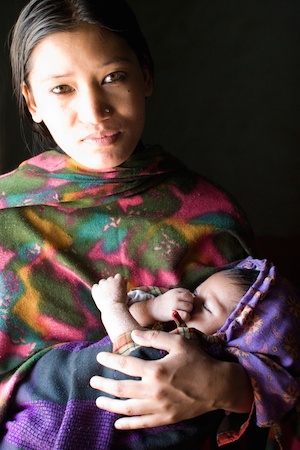
Nepal Woman and Child

This fast is an invitation to hold both fasting and care for the hungry together. To that end we invite you to participate in a very practical fast for one week – that is to eat at or below the level of the average Nepali person.

For just about all of us, this will mean eating less – less quantity as well as less variety.

The fast starts Sunday April 13 (with an evening of prayer and worship) and we’ll break the fast on Easter Sunday, April 20.

There are two objectives for this fast:

1) When we consume less, we can give more.

2) When we fast, we draw closer to God.


Consuming Less

Isaiah 58 makes it clear that we are to respond to the “hungry” in our world in practical ways.

God has linked WCV with the Himalayan Region Vineyards in a deep and profound way. Many of our brothers and sisters in this region live on minimal nutritional requirements. We are one body, and Paul admonishes us to “share each other’s burdens” (Gal 6). One way we can do this is to eat at their levels. This will allow us to consume less, while practicing solidarity with them.

Here are some facts and figures concerning the average Nepali that may help frame the conversation:

Canada’s average salary approx. $40,000 ($110 / day)
Nepal’s average salary approx. $1,200 ($3.30 / day)
25% of Nepal’s population live below poverty line of: $1.25 / day. (Nepal Bureau of Statistics)
Major concerns include little or no access to primary health care, education, clean drinking water and sanitation services. Food security and poor nutrition are major concerns, especially in rural areas. (IFAD)
Nepal has one of the highest early childhood mortality rates in the region.  2/3 of Nepali children are severely deprived and just under 40% live in absolute poverty.  50% of children under 5 are stunted and over 2/3 are underweight due to malnutrition. (Unicef)

By embracing their diet, we are in a way embracing our brothers and sisters in Nepal.  Eating their food in a way places them in the centre of our tables every day.

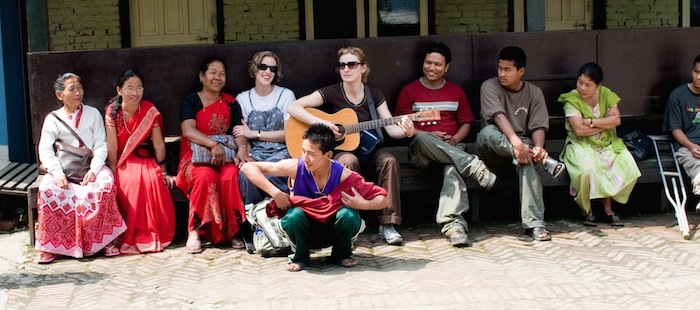
Nepal WCV Group

Giving More

By spending a week eating at these levels, most of us will have saved money on our grocery bills.  Keep track of what you save – or calculate it in whatever way makes sense to you.  Then we encourage you to donate it to WCV (mark it for Nepal) and we we will send it to Nepal to be used to feed those who are poor.

If you do not normally spend money getting your food, but have participated in this fast, we encourage you to give what you can to the “First Fruits” basket and the food will be shared at Drop-in.

Drawing Near to God

This fast is not just a clever way to raise money for those in need.  It can do something in us and to us.  As we turn ourselves towards God in prayer and fasting, we can be transformed.  Our prayer is that WCV will draw closer to God as we participate in this “fast that he has chosen”.

Throughout the week we will be having regular stories sent from the School of Justice, who will be in Nepal during this time.  They will give us short meditations to help us both understand the plight of the people there as well as God’s heart for them and us!

Preparing

Checklist for preparing for this week:

  • Put it on your schedules.
  • We will start the week with an evening of worship & prayer on Sunday, April 13, 7pm.
  • Do your grocery shopping beforehand (check the ingredients in the recipe in this booklet).
  • Calculate your normal weekly grocery bill and get ready to donate the savings.


Recipe – Dal Baht

Plain Rice (Bhat)

2 cups rice (Basmati or Long grain preferred)

4 cups water.

Lentils (Dal)

  • 1½ cups lentil (any kind), 4 to 5 cups of water, ½ tsp turmeric, 1 tsp minced garlic, 6 tbsp butter, 3/4 cup sliced onions, 2 chillies, salt to taste.
  • Wash lentils and soak lentil for 10 minutes – drain.

    Dahl


  • Add lentils to fresh water and bring to a boil.
  • Add all spices.
  • Reduce the heat and simmer, covered, for 20 – 30 mins (until lentils are soft).
  • Fry the onions, chilies and garlic in the butter & stir into the simmering lentils.


“On This Rock” Visual Art

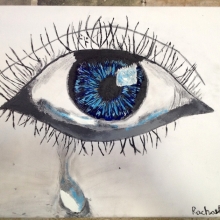
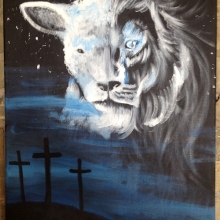
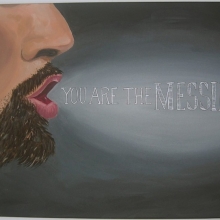
We’ve been exploring points along Peter’s discipleship journey for the past few months (and we’ll continue for the next number of months).  The audio recordings are posted here.  Along the way, we’ve commissioned various artists – both visual and performance – to share their interpretations of what they’re learning.  It’s like looking at the subject through a different set of eyes.  The artists among us can help us see a new way.  It’s been really fantastic – thanks to all the artists who have participated in a variety of media – from writing songs and poems to performing raps and dances.  Here are the visual representations at this point in the journey (click on any pic to view a full size):

Lent – Oasis

The water we need to live – that we need to really live – does not come from earthen springs.  It is not discovered in any well dug by human hands, not can it be drilled by any rig of human ingenuity.  This water is not pumped, bottled, chlorinated or dammed up.  It does not stagnate in forgotten pools nor flow with the ocean’s tide.  The water we need to truly live comes from an eternal source, springing from the resurrection into our lives, filling cracks and crevices with it’s cool, beyond-the-grave touch – transforming all in it’s path.

Here’s another meditative moment from The Work of the People.

Himalayan Vineyard Churches Update

Greetings to all our friends and families.

This months we gathered at Dharay Gaon place for the opening service of our new Church place for the community. It was so wonderful to be part of this journey, which we had started some years ago. As I sat there worshiping with the people of that community I realized that they are our first generation believers learning to walk with Jesus. I am happy with our Sikkim leadership team and especially Pastor Mikma Lepcha and Pastor Silas Rai and their team for their continuous trusting God along with the local believers. We have a family now overseeing this church and soon we will release him to be a Pastor. 100% of the funds needed for the building came from local contribution, which shows that the value we had been planting is bearing fruit.

I personally was blessed by that moment to cut the ribbon and open the door welcoming the believers and the community people to worship Jesus in that new place.

We take this time to thank you and our partners for this wonderful moment in our life. Saying thank you is like reading Philippians chapter 4 and esp. verse 10 to 22. Blessings!

Our next story is about Gorkha Vineyard fellowship.

~Noel Isaacs

Key Take-Aways from Vision Night

Introduction:

Fruit Vision NightWe had a great time on Monday, Feb 24 exploring some particular ways we’ve grown this past year as a community.  We heard stories of some compelling fruit in a number of people’s lives.  We also looked at the financial fruit we’ve tasted these past few years.

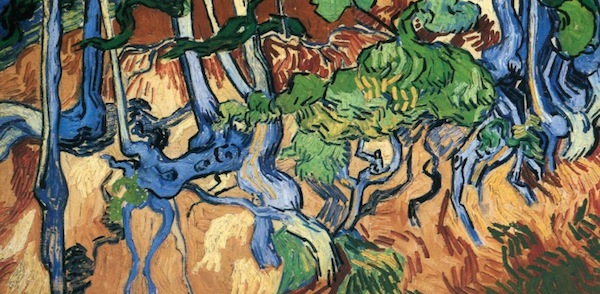
The apostle John said, it’s for the Father’s glory that we bear fruit (15:8).  Good fruit comes from good trees planted in a healthy environment.  In order to see more growth, we must tend the roots.  To that end, we asked, “What are the environmental factors that produce good fruit?”  What contributed to the fruit we experienced in WCV this past year?

Some of the answers to these questions are noted below.  The first section looks at our financial situation.  The second section documents the roots that were identified in the stories the 8 individuals who shared stories of fruit in their lives this past year.

Financial Commentary – 2013

1)    We have a very generous church, with many people giving to WCV.

2)    The growth in giving at WCV has been very significant over the last 4 years. In the last 4 years (since 2009) giving has risen from $335,000 to $428,000, an increase of 93,000 or 28%. This is a result of many things including increased attendance, growth in gifts from outside the church, as well as increased giving from some regular attenders of WCV.

3)    Giving in 2013 was at a record level – giving of $428,000 in 2013 represented a $48,0000 increase over the $380,000 given in 2012. This is a one-year increase in giving of approximately 13%, which is very significant and positive.

4)    The nature of the giving in WCV is that much of it comes in December.  In 2013 $72,000 was received in December. While this is a normal occurrence, it does strain the monthly cash-flow of the church since expenses need to be paid throughout the year. The result of this back-end loaded income is that it can be very challenging to manage the monthly cash flow and expenses of the church.

Financial Commentary – Budget 2014

1)    In 2013 gifts to the church from generous people outside our congregation totalled $50,0000. For 2014 we are budgeting this number to go down, since we have been made aware that $10,000 that was received last year will not be coming this year. We also know of some one-time gifts from regular attenders of WCV that will not reoccur this year. These facts have made us re-examine our budget for 2014 with the decision to decrease the budget slightly by 4%. So we are budgeting income and expenses for 2014 at $412,000.

It is important to note that a $412,000 budget is still a significant number and will actually require an increase in giving from the congregation to make up for the reduction of giving from outside individuals.

2)     Reducing the budget in 2014 to $412,000 will require a reduction in spending by the church of $16,000 compared to 2013. This is difficult to accomplish because we have very little flexibility in our budget. The biggest items in the budget are the 30% fund (donations to Nepal, missionaries, the poor etc.) which totalled $120,000 in 2013, payroll which was approximately $200,000 in 2013 and utilities $50,000. All other line items in the budget are relatively small in comparison to these 3 large categories.

3)    To achieve $16,000 in savings, we are reducing ministry/miscellaneous budgets by a total of $8,000 (this is made up of reductions to youth, breathe, sound, travel, miscellaneous expense), and payroll by $8,000 (representing a 5% decrease to pastoral staff). Cuts to the budget are not pleasant and if we had an easy or obvious place to cut that would not be felt we would do that, but the plain facts are that all expenses in the church represent important and worthy items, so any cuts to the budget will be painful. Our hope and prayer is that our income in 2014 will surpass the budget and that any cuts will be made up at year-end. If we do achieve a surplus in 2014 our first priority will be to repay the pastoral staff to make up for any lost income as a result of this budget cut.

4)    The economic demographics of WCV are such that only a portion of the people carries the majority of the giving.  We encourage everyone with the financial ability to participate fully in supporting the costs & ministry of the church.

5)    Pre-authorized withdrawals for giving are very important for our cash-flow and management.  We see a double benefit in doing this. First we can predict the cash income.  Second it becomes a discipline that minimizes the risk of forgetfulness.  We urge everyone to use this method of giving.   You download a pre-authorized withdrawal form here, fill it out and place it in the offering bucket.

Financial Summary

It is important to keep the right perspective when we are thinking about the budget for 2014. This course of action (cutting the budget) is not the result of a lack of generosity within the church. The facts (numbers) speak for themselves – giving is at a record level in the church and increased by a record level in 2013. The main issue we are faced with is how to maintain a balanced budget when there are so many needs and corresponding expenses within the church. Right now we are feeling that we are not in a position to increase the budget this year, given that the budget has increased so much over the last few years, in particular this past year 2013 and in light of the fact that we are projecting gifts from the outside to go down. So this will be a bit of a different year, with a focus on belt tightening and expense management. But let’s not be discouraged – we don’t think anyone would be surprised if 2014 was our best financial year yet.  You never know what is in store…..
Roots Vision Night

Personal Stories of Fruit and Root:

We had 8 people share stories of growth in their lives this past year.  Listed below are the roots that were identified as significant contributing factors in each of these stories.  If you’re interested in hearing the actual stories, the audio is posted here.

Andrew Chan – The Upstairs Gathering.  The time and attention artists give to their art gives back to the viewer.  The team who ran the Upstairs Gathering in the Fall.  Creativity.  The ability to envision something different.  Time and attention.

Krista Heide – Study, reading and online resources.  Giving space for something to grow.  Teamwork generates more energy towards creativity.  The Outer Circle.

Elias Rieger – People at the Kathmandu Vineyard put a lot of work into the youth trip.  The giving of WCV towards the youth – fundraiser & funds budget.  Funds budget (the 30%).  Practical service.  Wrestled through what they saw – lots of processing.  Money towards Youth leadership (Jodi now administers all 3 youth groups – grown from one group).

Stephanie Martens – People giving to her and her girls in a variety of creative ways.  Sticking with each other, knowing each other, knowing each other’s history.  There are gifts in the dessert.  Practicing excruciating vulnerability.

Naila Janzen – Persevering through the hard times instead of running away.  Faithfully adapting, learning and rolling with the ups and downs of life.

Angela Falk – The Outer Circle process and her triad.  The fruit in other people’s lives fertilizes the roots of others.  The rich and fertile soil of WCV’s relationships.  House Group.  Knowing we will never be forsaken.  Circles of sharing.  Community.

Gord Holmstrom – Community, care and Flatlanders.  People taking time to be with, love and live with him.  Perseverance in school and staying clean.

Andy Wood – The faithful giving of WCV towards helping the Kathmandu Vineyard pay off their building.  Just paid it off – frees up finances to re-boot the Mobile Bible School in the Himalayan Region.


In Conclusion:

In summary we want to say thank-you to all of the faithful servants who give so much in every way to the church. This is a wonderful, vibrant growing community that is spreading the gospel and advancing the kingdom of God both locally and abroad. There are so many good things happening here…. way too many to list. Lets press on into 2014 with a sense of expectancy and with trust that the Lord will meet all of our needs, as he always has.

The Staff and Board of Directors 

The audio of the evening is posted here.
Lent – a Season of Preparing for More

On March 5, we entered the season of Lent.  A season, 40 days leading up to Easter, that the church has historically observed as a time of preparation.  A time to prepare hearts, bodies and lives for the life that’s made available through Jesus’ resurrection.  Lent is only helpful if it points us towards resurrection.  Giving up for Lent is only useful if it points us to all that God has for us.  Dying to ourselves is only a good thing if the Holy Spirit can come afterwards and bring us to life.  This short video is a great reminder that God is not about scarcity and that Lent is intended to help us prepare for more, not less. 

You may want to check out these resources:

Pray As You Go – a daily contemplative podcast that leads the listener through a series of meditative prayers and scripture readings.  Each episode is about 10 – 13 minutes long.  You can listen right from their website or subscribe to it via iTunes podcasts.

Lent for Everyone – this is an online devotional created by N.T. Wright.  It includes daily scripture and a well crafted and thoughtful devotion by one of the foremost New Testament scholars of our time.  (You have to sign up to view it)

Living Lent Daily – features prayers, thoughts and more each day to inspire you throughout your Lenten journey. A new article will become available daily throughout Lent.  These are quite short.

Have you used any of these resources?  Let us know how they were helpful in the comment section below!

SOJ/IJM Film Screening

Yesterday our Vineyard School of Justice – in collaboration with International Justice Mission Canada (IJM), Global Wonders, and Mennonite Central Committee – hosted a special evening on the subject of modern day slavery. We screened two short films (one of which was IJM’s latest documentary “At the End of Slavery“), had presentations by Angie Redecopp (Director of Development at IJM Canada) and a spokeswoman from Global Wonders (who sell jewelry made by woman rescued from sex trafficking in Nepal), and had display tables where attendees could purchase Global Wonders jewelry and obtain resources from all three organizations. It was a wonderful night with around 45 people in attendance. We’re looking forward to collaborating with other organizations who are doing justice and having other events like this in the future. Thank you to everyone who attended!

View more photos of the event on our SOJ Facebook page.